Let us share the magic of Slovakia with you...
We provide complete services for travelers and visitors of Slovakia
Since 2003 more than 10 000 customers were satisfied with our services
Slovak folk heritage
Country holidays
Cycling tours around Slovakia
All kinds of tours in the High Tatras mountains
Walking tours in nine National parks
Wooden architecture
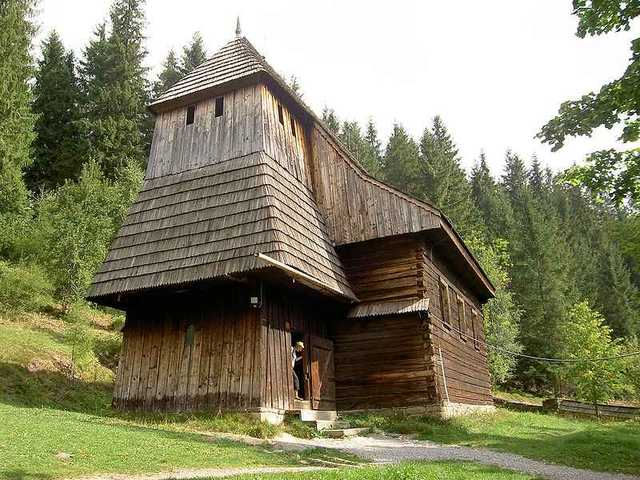
Slovak UNESCO heritage - wooden churches and wooden architecture
Trekking in the High Tatras mountains
Exploring the castles of Slovakia
Walking tours through beautiful meadows
Folk culture and folk architecture
Bratislava sightseeing tours
Famous folklore festival Vychodna, Detva and the others...
Bojnice castle
Visiting salash and sheep farms
Exploring Slovak mining history - golden and silver towns Banska Stiavnica, Kremnica
Main ridge of the Low Tatras mountains

Tour of Slovak Folk Heritage 2012 - Two Folklore Festivals Vychodna, Detva in One Trip

Tour of Slovak Folk Heritage 2012 - Two Folklore Festivals Vychodna, Detva in One Trip, Slovakia Travel, Location Slovakia is a country with very rich cultural traditions and customs. Our folklore is very distinctive and interesting. Slovaks are very proud to have such traditions and they pass their folk songs, music and dance from generation to generation. There are many folk artistic groups keeping and representing these traditions. The most famous are: SLUK and Lucnica in Bratislava and Sarisan in Presov. Orava, Liptov and other regions situated on the North together with the region lying around Zemplin on the East are the most important regions in keeping the folk customs and traditions. All these ensembles act together in Slovak folk festivals.
Important countrywide cultural events take place during the summer in Vychodna and Detva. They are international folk festivals on which everybody can discover beauties of the traditional folk culture, handicrafts, songs, music, dance and customs. They range among the most interesting and important folk festivals in Slovakia.
But during this tour you will not visit only folk festivals. You will see folk architecture still inhabited by people – Cicmany, Vlkolinec, Spania Dolina, Brhlovce and the open-air museums which have not only traditional houses, furnishings and equipment but which offer also the Slovak handicrafts demonstrations.
This tour is for those who want to escape from hurly-burly of everyday life and be a part of life when people lived a practical life in harmony with nature.

Join us during June 28 - July 8 and visit two festivals

Itinerary

Day 1:

(28.06.2012): arrival to Bratislava, welcoming at the airport, accommodation.

Day 2:

(29.06.2012): Our first stop will be in Open Air Musuem of Slovak folk architecture in Cicmany and in the Museum of the Slovak Village in Martin.

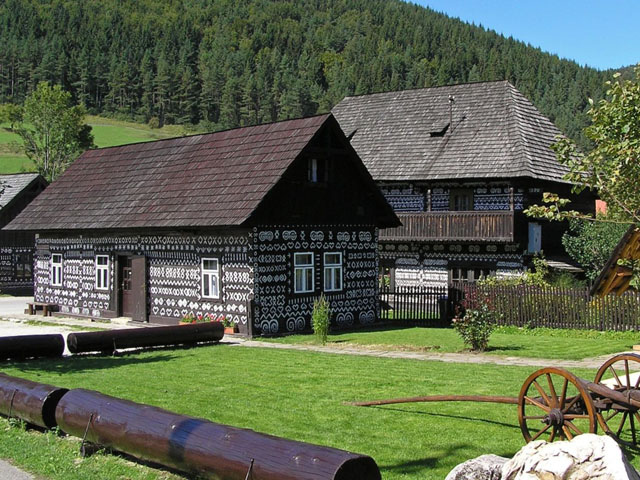
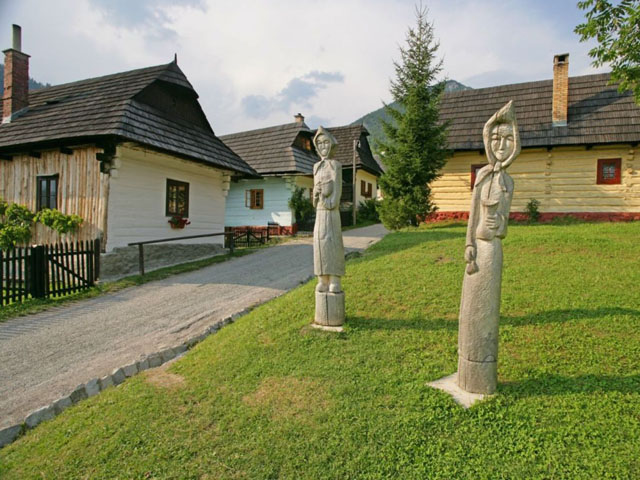
Cicmany is village surrounded by the mountains Strazovske vrchy and Mala Fatra. The village is famous for its original log houses with the typical white ornamentation. The best-preserved ones include the building of Radenov dom and the neighbouring Gregorov dom, which shelters the ethnographic exhibition where visitors can learn something more about the history and folklore of this region.

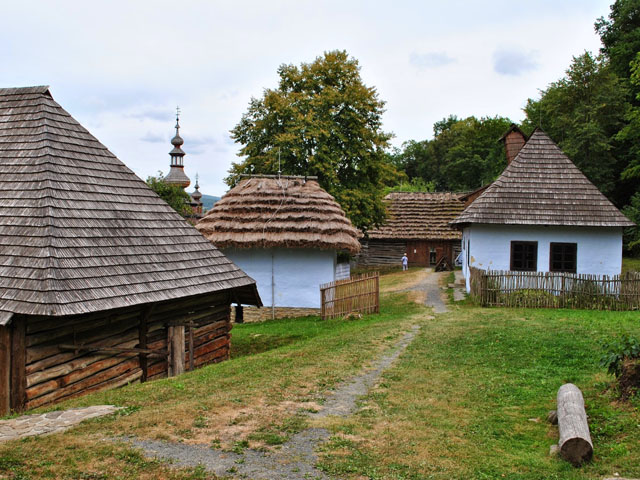
The Museum of the Slovak Village is the largest ethnographic open-air exposition in Slovakia. It provides a picture of traditional folk architecture, housing and the way of life of people who lived in northwestern Slovakia in the latter half of the 19th century and the first half of the 20th century. For the time being, examples of folk architecture of the Orava, Liptov, Kysuce - Podjavorníky and Turiec regions are on display.  The museum features 129 buildings that used to serve living, production, social and sacral purposes. Some of the buildings are furnished and open to the public. They are agricultural homesteads that include buildings used for living and production, as well as buildings sitting per se of engineering, social and religious nature.

Day 3:

(30.06.2012): We will spend whole day in village Vychodna where is held one of the greatest folk festival in Slovakia.

The festival is held as part of the programms of the International Council of Organizations for Folklore Festivals and Folk Art (C.I.O.F.F.). Every year it welcomes an average of 1,500 performers, and the number of visitors reaches 70,000 people. The magnificent scenic programme in the open-air theatre during the three festival days is completed by minor programmes, exhibitions and accompanying events engaging the visitors right into the centre of happening.

Day 4:

(01.07.2012): We will visit Slovak National Park called Pieniny and we will raft on the river river Dunajec. Then we will taste goral meals in typical goral restaurant.

Rafting using wooden rafts is one of the greatest tourist attractions of northern Slovakia. One of the unforgettable experiences is certainly rafting down the river Dunajec in the splendid natural scenery of the Pieniny National Park. The oldest written documents about wood rafting come from 11th century. It became more widely used as a result of settling of the mountainous regions and development of woodcutting. It has existed as a tourist attraction since the half of 19th century. The wooden raft is a vessel made of logs, beams or boards. Besides wood transfer, it used to serve for transferring various materials, occasionally also people. The best known route is rafting down the Prielom Dunajca from the village Cerveny Klastor. The end of route is near the chalet Pieniny where one can listen to goral music and taste goral specialities.

Day 5:

(02.07.2012): We will visit one of the largest wooden church building in Central Europe. and Slovak folk Restaurant.

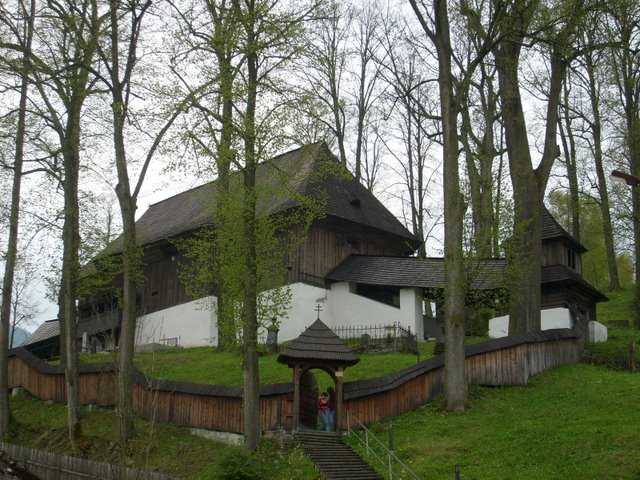
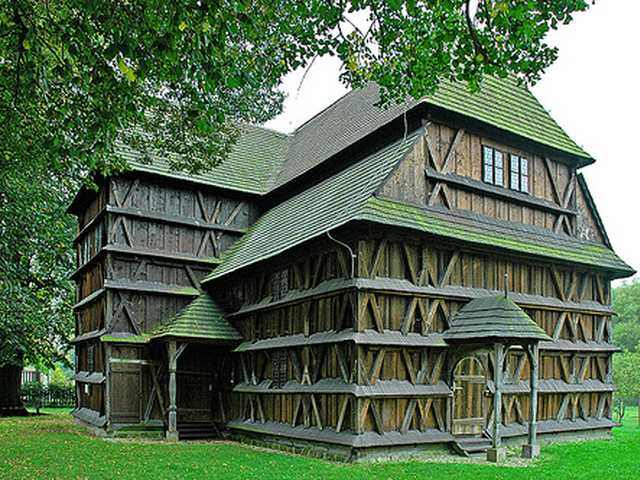
Village Svaty Kriz there is famous for its wooden articled Evangelical church one of the largest wooden buildings in the Central Europe. The ground plan of the church is in the shape of a 43 metre-long cross. The church takes almost 6,000 persons. The wooden Baroque furniture together with the remarkable wooden Baroque altar from 1693 with the painting of Christ's Transformation were designed to inspire awe. Also the pulpit standing on log foundations supported, as if by a Baroque angel is unique both in terms of visual impression and acoustics. 

Salas Krajinka restaurant (Shepherd Landscape) is unique original shed in the picturesque surroundings of beautiful countryside of the lower Liptov. You will be part of the unique atmosphere of the daily life of shepherds which includes grazing, milking and processing of sheep milk in traditional way by hand.

Day 6:

(03.07.2012): We will visit village Vlkolinec and we will be getting know miners life in past in one of the most picturesque village Spania Dolina.

Vlkolinec is village with preserved folk architecture. For its unique is on the list of UNESCO heritage.
A typical example of a house in Vlkolínec is the  farmer's house - a detached outdoor part of the expositions of the Liptov Museum. The house was built in 1886 and opened to public in 1991. Its well-preserved original interior and furniture provide a true picture of the way of life of its ancient inhabitants from the end of the 19th and beginning of the 20th century. The remaining protected objects in the monument reserve are still inhabited, its population amounts to 30 and this is the reason why visitors can see only the exterior of houses.

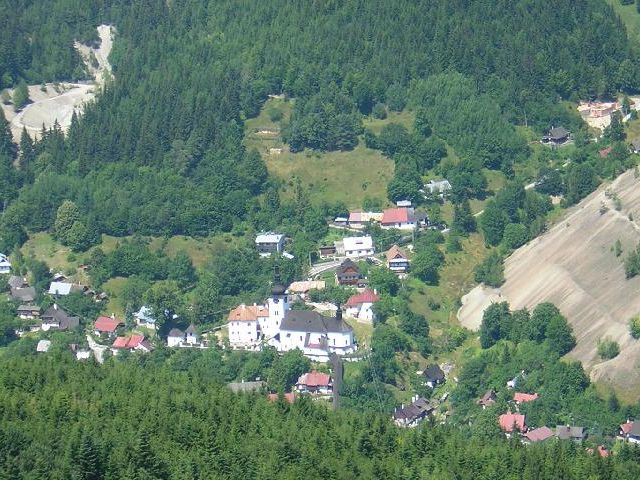
Spania Dolina consists of unique set of miner houses built of wood and stones. The former mining village is undoubtedly one of the most beautiful in Slovakia. Copper and silver ores were mined here in the past. Along with the walled structures once owned by the mining administration a substantial part of local architecture is formed by houses of miners mostly built of logs on stone foundations.   Both the stone or wooden walls were plastered with mud and painted with lime. The saddle roofs with gables were originally covered by shingles. The majority of preserved houses are from the 19th century.
Heritage, which passes through the centuries from generation to generation. The beauty of the priceless woven patiently, imagination and immeasurable love. Bobbin lace is an essential part of the Spania Dolina and real treasure, not only of this community but the whole of Slovakia.

Day 7:

(04.07.2012): This day we will discover beauty of Horehronie region.

Horehronie  is charming region full of wooden cottages and  folk customs. Almost every village situated in a deep valley  boasts its traditional costumes, songs and traditions that are most visible during holidays such as Carnival, Christmas and Easter.
For example village Hronec  boasts an interesting technical monument of the first cast iron bridge in Central Europe, which dates from 1810.  Folk architecture of preserved wooden houses can be admired in typical baths mountain settlements and villages Drabsko and Sihla.
Horna Lehota is famous for beautiful bobbin lace, but also for revolutionary poet and a significant national revivalist, known as folk  and the first poet of the new Slovak Samo Chalupka, who was born here.
One of greatest attractions in regions Horehronie and central Slovakia is the historic Ciernohronska forest railway. It once hauled timber down the picturesque valley of the river Cierny Hron, now it transports visitors and above all their children. The first 10.8 km long section of the railway was put in operation in 1908. The network of the forest railway was expanded until it measured unbelievable 132 km. Since 2003, visitors apart of having a ride on the Ciernohorska railway can also visit the interesting open-air museum of forest.

Day 8:

(05.07.2012): This day we will visit old mining town Banska Stiavnica.

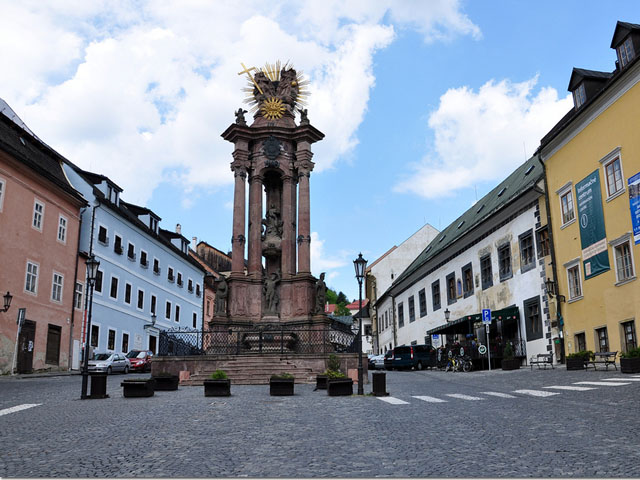
The former mining town Banska Stiavnica is one of the most beautiful and in historical terms one of the most interesting towns in Slovakia. The buildings in the historic centre are included in the Town Monument Reserve. The Banska Stiavnica reserve comprises as many as 360 structures. Together they present a unique set of high cultural and historical value, which is set into the wonderful environment of the Stiavnicke mountains.
If the weather is warm it is possible to relax at the lakes called Tajchy. Tajchy are lakes situated in central Slovakia. They were constructed for the needs of the local mines and today they serve for recreation bathing in the wonderful natural setting next to Bansks Stiavnica, the town inscribed in the UNESCO List of Natural and Cultural Heritage.

Day 9:

(06.07.2012): This day we will discover region Podpolanie. Detva is a centre of one of the most specific ethnological regions of Slovakia. It lies on the southern slopes of Polana, at the heart of the country. The visitors of Detva are most of all attracted by the highlands and the traditions of the folk culture.
The folklore arts and traditions are subject of interest and admiration up to date. Dippers, fujaras (Slovak sheperds long pipe), shepherd’s crooks, hatchsticks and various items made of leather all testify about the originality and creativity of traditional craftsmen from Detva.  Carved wooden crosses along the roadsides and sepulchral crosses are one of the most remarkable artistic manifestations from this region. Such crosses served as a basis for creating the symbolic graveyard in the High Tatras. The Detvan needlework also deserves attention.
Great views on the surrounding landscape and panorama is offered by the archaeological location Kalamarka – an andesite rock plateau encircled by rock-like walls, chimneys and towers greater than 10 meters in height.

Day 10:

(07.07.2012): We will spend whole day in Detva, a place of second biggest folk festival in Slovakia.

The international festival of folklore and traditional folk culture - Folklore Festival Polana is one of the most successful events in Slovakia.
During these days, Detva blossoms with the music, singing, festal atmosphere, and welcomes approximately 1,500 performers.  There will be approximately ten scenic programs on the stage of the Detva amphitheatre, which is one of the most impressive outdoor scenes. Visitors can also choose from many accompanying events such as programs in the church, shepherd´s culture presentation, dance school, fujara lessons,  traditional fair of folk crafts, carving presentation, ethnographic exhibitions, visual art and photography exhibitions, etc.
  The most interesting part of the Folklore Festival Poľana in Detva is the series of the events focusing on the revival of the production of folk musical instruments INSTRUMENTUM EXCCELLENS that is one of its kind in Slovakia. Special attention is paid to the fujara (a large folk shepherd's fipple flute)  – a UNESCO treasure.

Day 11:

(08.07.2012): Departure day. On the way to Bratislava airport we will have last stop in village Brhlovce.

The complex of rock dwellings squeezed in tuff rocks situated several kilometres east of Levice, in the village Brhlovce, is unique in the territory of Slovakia.
The exhibition of popular dwelling is situated in a house with its backyard cut into the tuff rocks. It demonstrates the original way of housing in this region. The yard No. 142 was awarded the international recognition Europa Nostra 1993 for conservation and restoring of the architectural monument. The exhibition of popular dwelling is an external exhibition of the Levice-based Tekov Museum.

Farewell and departure from Slovakia.