Czech and Slovak Grand Tour
Czech Republic and Slovakia are neighboring states, formed a sovereign state CZECHOSLOVAKIA in Central Europe, with common history and very warm relationships among people.
Within 14 days you will visit 2 capital cities both states- Bratislava and Prague, many interesting places- Banska Stiavnica (one of the most beautiful and in historical terms one of the most interesting towns in Slovakia), Levoca (a true cultural and historic jewel among the Slovak towns), The High Tatras Mountains (the smallest huge Mountains in the world), Prague (a political, cultural and economic centre of Europe and particularly central Europe during its 1,100 year existence) and much more.
In addition to visiting these places you will taste local cuisine, you will meet local people and explore various culture.
So, do not hesitate and join us to discover heart of Europe!!!
Itinerary
Day 1:
Arrival to Bratislava (The Capital of the Slovak Republic), accommodation, informal reception.
Day 2:
Sightseeing of the centre of Bratislava also called the Old Town, visiting Devin Castle standing on a massive rock hill above the confluence of the Danube and Morava, transfer to Banska Stiavnica.
Bratislava castle - symbol of the city - The Castle Hill in Bratislava and its Slavonic castle were of importance in the period of the Great Moravian Empire. The south-west tower housed the Hungarian coronation jewels for two centuries.
Bratislava old town - characterized by many baroque palaces and sacral buildings - Bratislava's Town Hall erected in the 14th–15th centuries. The historic centre is characterized by many baroque palaces. Notable cathedrals and churches include the Gothic St. Martin's Cathedral, the Franciscan Church and the Blue Church.
Devin Castle - The fortress, used as a watchtower by the Slavonic counts Rastislav Dovina, was mentioned in the manuscripts as early as the 9th century AD. After the fall of the Great Moravian Empire of the ancient Slavs, the Devin fortress became an important strategic fortification of the Hungarian Kingdom. As early as in the 13th century, a smaller building with a tower (foundation of a later castle) was situated at the top of rocky hill. Advancing Napoleon troops in 1809 blew up the fortress. Since 1965 an archaeological research has been carried out in the castle area. The castle ruins have been partially reconstructed under auspices of the Municipal Museum in Bratislava.
Day 3:
Sightseeing of the city Banska Stiavnica, transfer to Levoca.
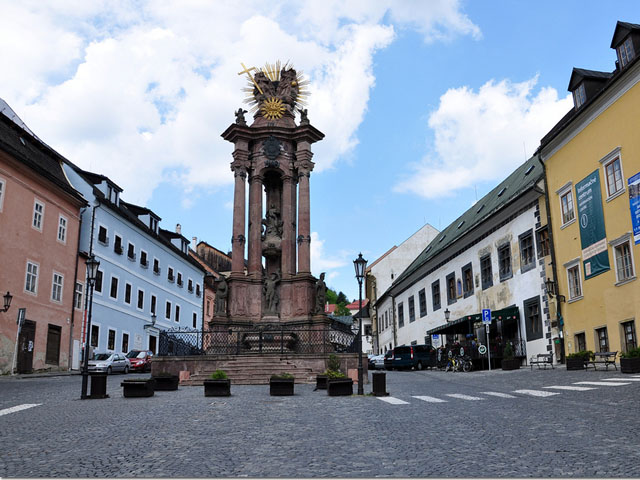
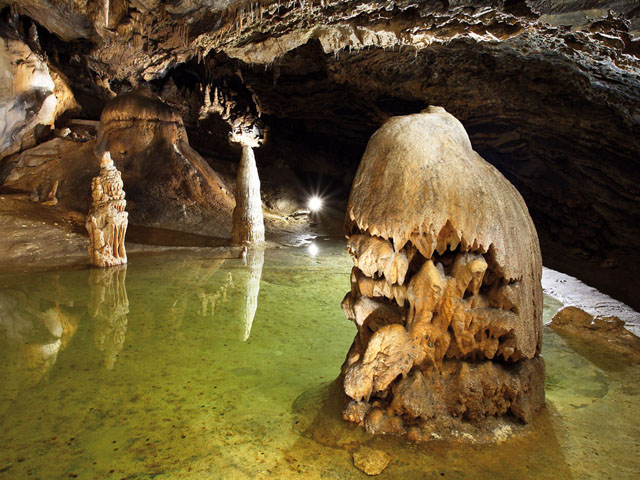
Banska Stiavnica UNESCO heritage - gold mining town - The heart of the town is the historical Trinity Square. There is also a mineralogical museum. The open air mining museum offers a two kilometers long underground excursion. Ancient mine open to the public, situated just under the center of the town. Banska Stiavnica is also known for its Mining Academy founded in 1762 as the first institution of higher education of its kind in the world.
Day 4:
Sightseeing of the town Levoca, visiting Spis Castle, Spisska Kapitula and Zehra.
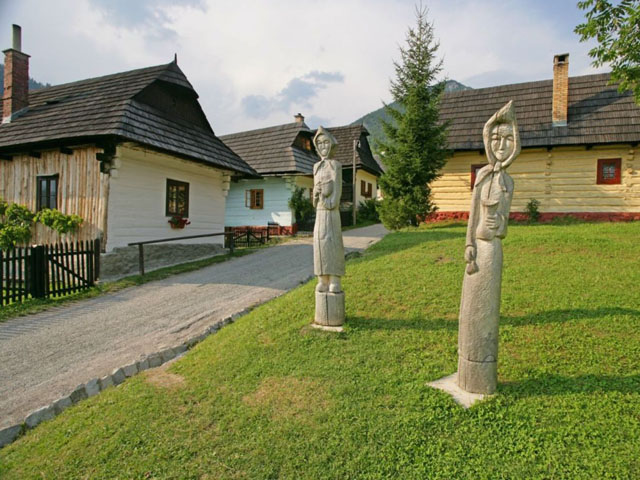
Levoca, ancient town situated at the foot of the Levocske Vrchy mountain range, is one of the most beautiful towns in Slovakia. It was the main center of the Spis region and was a free royal town since 1323. The most dominant building is the Gothic Church of St. Jacob with the valuable late-Gothic altar of St. Jacob, which is the tallest altar in the world (18.6 meters). It was made in the workshop of Master Pavol of Levoca. Levoca is the most significant pilgrimage place in Slovakia.
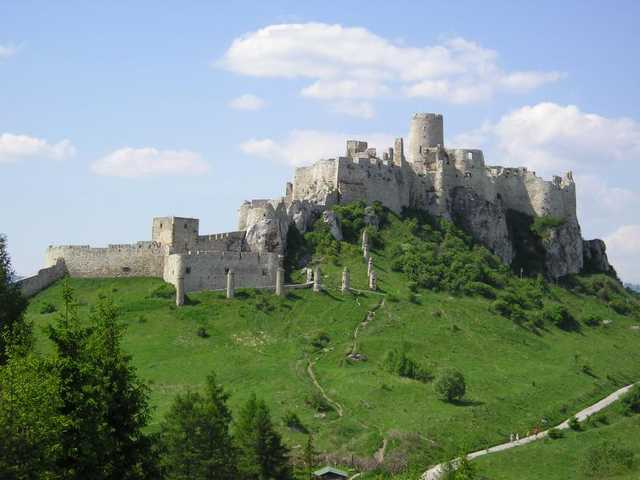
The Spis Castle is the largest medieval castle in central Europe. It dates back to 1113 when it was built as a royal castle on an important trade route to the Baltic Sea.
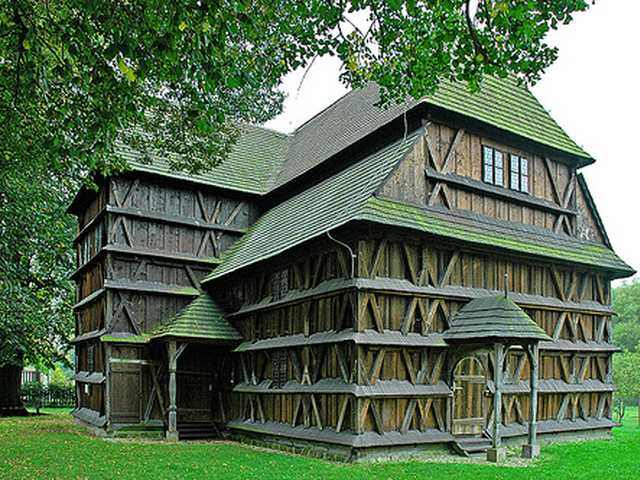
The second part of the historical settlement is Spisska Kapitula, founded as an independent religious community. The last but not least is the village of Zehra where the Gothic Church of Holy Spirit with a wonderful interior and Gothic paintings is situated.
Day 5:
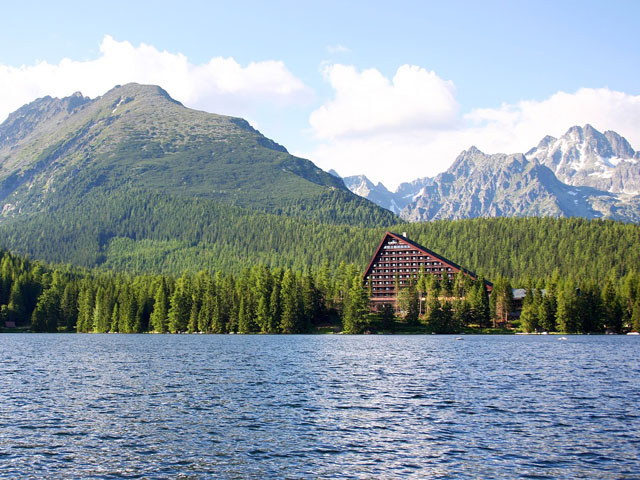
The High Tatras Mountains, the largest mountain range of Slovakia and the most significant travel center.
There is about 35 valleys found here, 110 sea eyes, but, above all, it is the peaks. There is found here more than 500 peaks, out of which 10 are above 2600 meters high. Every view from a Tatra peak leaves in the heart of a man a life long impression. The silence of the valleys, the cauldrons, the sea eyes, the silky sheen of the waterfalls and simultaneously, the monumental touches with the heights of the peaks- all of that is the magical world of the National Park, High Tatras. This tour is intended for those, who like to walk in the forests and want to, maximally, savor their beauty. The entire tour is marked by breath taking views of the Tatra peaks. The dawns, the sun-sets, an evening atmosphere in the alpine chalets, these are the experiences that etch themselves into the memory for life.
Day 6:
Visiting Cerveny Klastor and the Pieniny National Park.
This national park is located in the north of eastern Slovakia and it partly forms a natural border with Poland. Pieniny is Slovakia's smallest national park where the river Dunajec formed excellent picturesque scenery. We will try one of the attractions of this area - rafting on wooden rafts down the river Dunajec canyon and we will have a nice walking in nature around the village of Cerveny Klastor with a Carthusian-Carmelite monastery from the 14th century.
Day 7:
Transfer to Czech Republic- city Kromeriz, accommodation and than sightseeing of the town Kromeriz.
The town was founded in 1260 by Bruno von Schauenburg, bishop of Olomouc. In 1266 it is already called a town. Bruno also established what was to become the famous Archbishops Palace. The town was badly damaged in Thirty Years' War, was plundered twice by Swedish troops (1643 and 1645), after this Black Death came. Bishop Karl II von Liechtenstein-Kastelkorn rebuilt the city and palace after the war. Constitutive Imperial Congress was sitting in Kromeriz in 1848. Kromeriz is also a birthplace of Max Svabinsky , one of the most important Czech painters of the last century. A permanent exhibition called Max Svabinsky Memorial can be seen in the Museum of Kromeriz Region, located in the lower part of Big Square , near the entrance to the Bishop's Palace. Gardens and Castle at Kromeriz was enlisted as a UNESCO World Heritage Site.
Day 8:
Transfer from Kromeriz to Olomouc, accommodation and than sightseeing of the town Olomouc, on the Morava river and the ecclesiastical metropolis of Moravia.
Olomouc contains several large squares, the chief of which is adorned with the Holy Trinity Column, a UNESCO World Heritage Site. The column is 35 m high and was built between 1716 and 1754.The most prominent church is Saint Wenceslas cathedral. At the end of the 19th century it was rebuilt in the neo-Gothic style, but it kept many features of the original church, which had been rebuilt many times (Romanesque crypt, Gothic cloister, Baroque chapels). The highest of its three spires is 100 m. The church is close to the Romanesque Bishop's Palace (often incorrectly called the Premyslid Palace), a 12th century Romanesque building . The real Premyslid Palace, i.e. the residence of Olomouc members of the governing Premyslid Dynasty, used to stand nearby. Another place that John Paul II visited here was Svaty Kopecek ("The Holy Hill"), a part of Olomouc lying on a hill, with the magnificent Baroque church of the Visitation of the Virgin Mary looking down on the city. The Pope promoted the church to Minor Basilica. The principal secular building is the town hall, completed in the 15th century, flanked on one side by a gothic chapel, transformed now into a museum. It possesses a tower 76 m high, adorned with an astronomical clock in an uncommon Socialist Realist style.
Day 9:
Transfer from Olomouc to Litomysl, accommodation and sightseeing of the town in the Pardubice Region.
The chateau complex in the town centre is listed as a UNESCO World Heritage Site - dominant feature of Litomyšl - the monumental Renaissance castle dating from the years 1568–1581. The birthplace of the Czech composer, Bedřich Smetana. There is an extensive permanent exhibition of Olbram Zoubek's (a famous Czech contemporary sculptor and designer) sculptures and art in Litomyšl Castle Vault Gallery.
Day 10:
Transfer from Litomysl to Kutna Hora, accommodation and than sightseeing of the city Kutna Hora and the neighboring town of Sedlec - a UNESCO World Heritage Site.
Among the most important buildings in the area are the Gothic, five-naved St. Barbara's Church, begun in 1388, and the Italian Court, formerly a royal residence and mint, which was built at the end of the 13th century.
The Gothic Stone Haus, which since 1902 has served as a museum, contains one of the richest archives in the country. The Gothic St. James's Church, with its 86 meters tower, is another prominent building. Sedlec is the site of the Gothic Cathedral of Our Lady and the famous Ossuary.
Day 11:
Transfer to Prague, accommodation for 3 nights.
Hundred-spired Prague, Prague – the mother of cities, magical Prague. These are just three titles which the capital of the Czech Republic proudly wears. Since the very beginnings of the Czech state, it has been its natural political, business and cultural centre. This historic yet modern city is more than 1,000 years old. It has an extraordinary charm about it which can be sensed in every season. Its status as a UNESCO World Heritage site speaks for its worth.
Day 12:
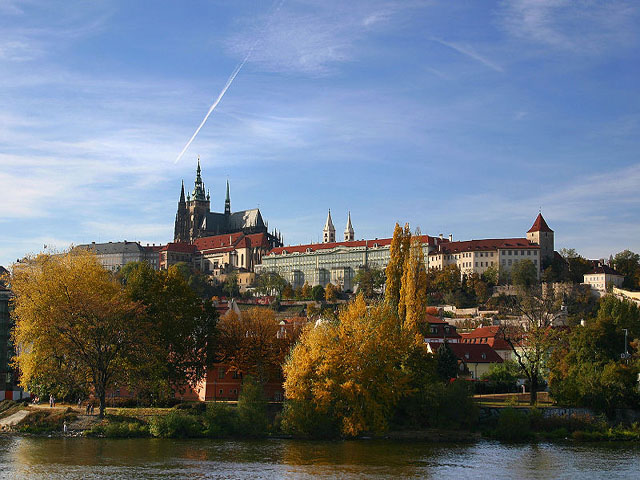
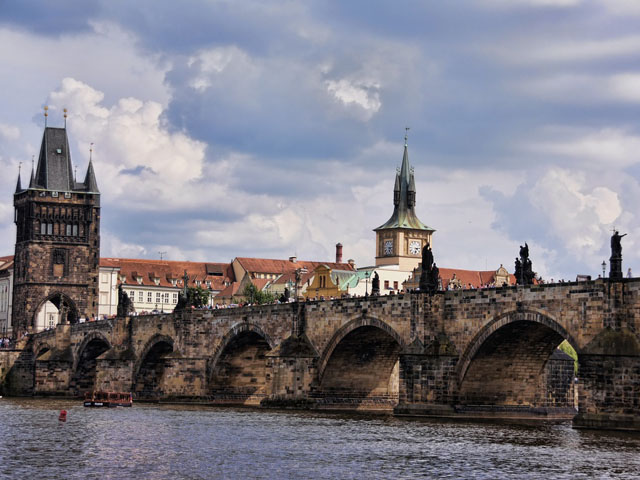
4-hours city tour of Prague Castle, The Cathedral St. Vitus, Charles Bridge: Prague Castle holds a number of records. First of all, it is the largest castle in the world, entered in the Guinness Book of Records. It is also the most visited Czech monument among tourists. It is the most important of Czech castles, because from time immemorial it has been the residence of sovereigns, and currently the President. Cathedral St.Vitus is the largest and most important of Prague’s places of worship and a spiritual symbol of the Czech state. The Gothic Cathedral we see today is the third church to be built on the site – the first building to stand here was a Romanesque rotunda, then came a triple-nave basilica, and in 1344 Charles IV ordered work to begin on the construction of a Gothic cathedral. Charles Bridge is one of the most beautiful bridges in the world and the oldest bridge in Prague. It is almost 10m wide, 516m long and rests on 16 arches.Towers guard both ends of the bridge – the Old Town Bridge Tower and two Malá Strana Bridge Towers.
Day 13:
4-hours city tour of Old Town Square: The Old Town Astronomical Clock dating from the 15th century is one of the most treasured and best-known of Prague’s historical sites. It can be found on the side of the Gothic tower of the Old Town Hall. The Astronomical Clock is a one of the best examples of Czech Gothic technology and a prized work of art. Synagogues in the Jewish Town: In addition to the Old-New Synagogue there are 5 other synagogues in the Jewish Town. Most of them are run by the Jewish Museum.
Day 14:
Transfer from hotel to the airport Prague Ruzyne.
TOURS IN SLOVAKIA
- Unesco Sites Tour
- Wooden Churches Tour
- Jewish Heritage Tour
- Grand Tour of Slovakia
- Grand Tour of Czechoslovakia
- Slovakia & Prague Tour
- National Parks Tour
- Sheep Breeding Country Tour
- Walking & Hiking Tours
- Backpacking & Trekking Tours
- Cycling Tours
- Horse-riding Tours
- Bird Watching Tours
- High Tatras Tours
- Self-guided Tours